

NATIONAL
DANCE
THEATRE
COMPANY
NATIONAL
DANCE
THEATRE
COMPANY
ABOUT
ABOUT
A Historical Overview – Over Six Decades of Achievements
Background & Beginnings of the NDTC
The National Dance Theatre Company of Jamaica (NDTC) was formed at the time of Jamaica’s Independence in 1962 more directly out of the Dance Theatre Group which produced the highly successful dance-show ‘Roots and Rhythms’ and partly out of the dance movement in Jamaica, which had its early beginnings over sixty years ago. It was formed with the blessings of the Jamaican Ministry of Development and Welfare, which also handled cultural affairs, and was jointly led by Artistic Directors — Eddy Thomas and Rex Nettleford.

Rex Nettleford and Eddy Thomas, co-founding Artistic Directors of the NDTC
It has been said that the success of a dance-theatre anywhere depends on three things viz, a tradition or sense of tradition, special peculiar circumstances compatible with its growth, and the incidence of energetic, dynamic and resourceful leadership. The NDTC may be regarded as one result of the existence of all three factors in the island. In the absence of an integrated dance tradition as in India or countries of Africa, the Jamaicans have had to depend on the spirit rather than on the letter of indigenous material (folksongs and stories largely) to build their dances. The emphasis is on the creative approach as can be seen in the Company’s repertoire. The dance-theatre tradition, therefore, dates back to the late thirties with the pioneer work of the late Hazel Johnson. She was, however, limited by the strict tenets of the classical idiom in which she worked and the breakthrough for a dynamic and broad-based dance movement came with the efforts of Ivy Baxter.
The special peculiar circumstances, which facilitated this early work, turned on the new nationalist awakening when politicians, poets and artists, all in their own way, sought identity from the experiences of their native soil and engaged in the search with fervour of emotion, enthusiasm and commitment. The diverse sources of the Jamaican cultural beginnings added dimensions. They also offered a special dynamic arising out of the inherent contradictions of the society and the drive towards fusion. The work of the Company is sometimes described as the melody of Europe playing on the rhythm of Africa with more recent tonal embellishments from the dynamic community of North America.
The movement needed leaders to give it form and purpose. Rex Nettleford and Eddy Thomas helped to found the NDTC in the spirit of the movement pioneered by Ivy Baxter. But their dream was made a reality only by the help of others like Madame May Soohih, Barbara Fonseca and the Misses Betty and Punky Rowe who are courtesy tutors to the Company and who have given every co-operation and assistance for its development. The Company is indeed made up of dancers who have studied under these dance-teachers.
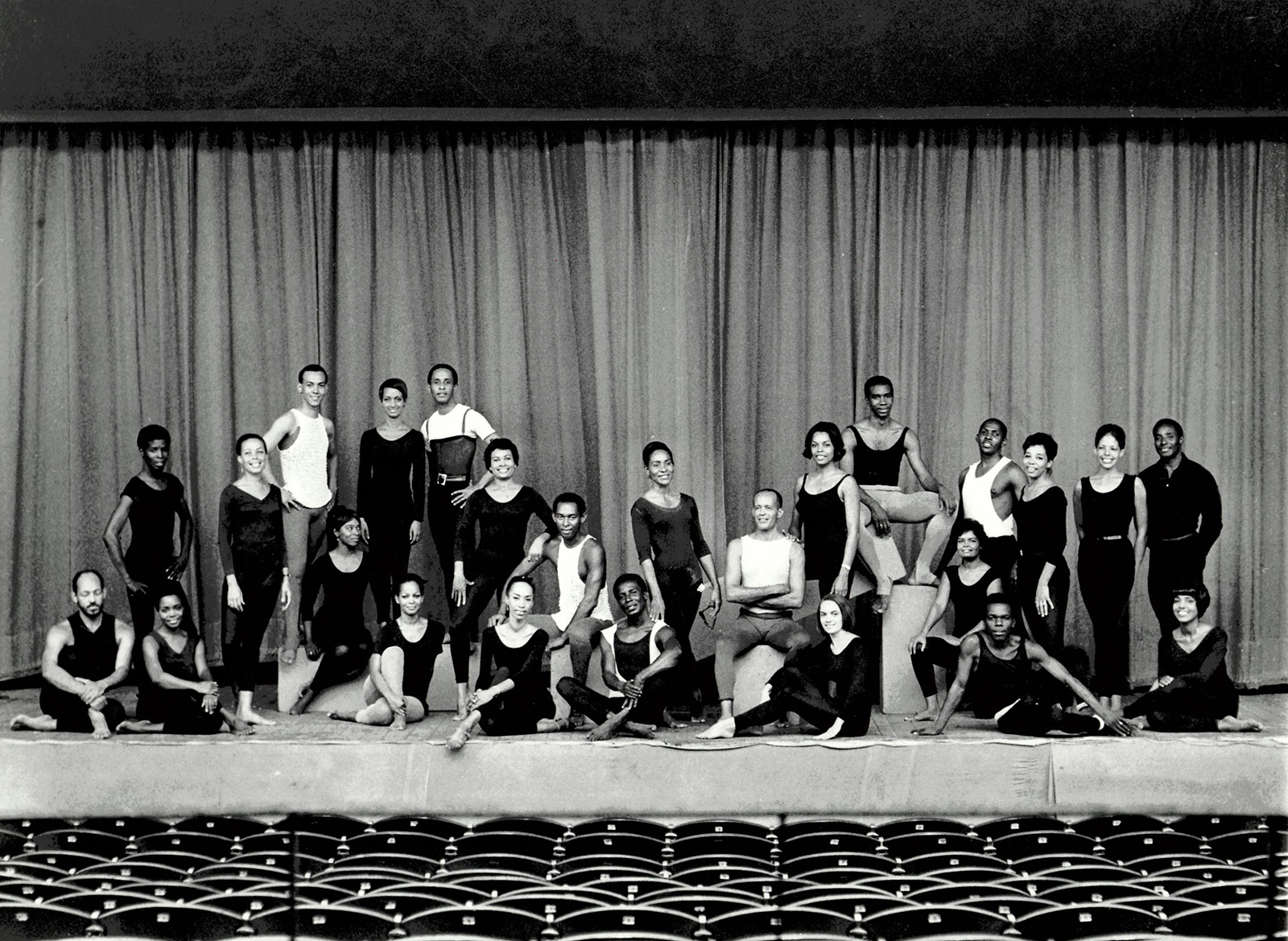
Company dancers in the late 1960s included (standing, left to right) Frank Ashley, Noelle Chutkan, Bert Rose, Patsy Ricketts, Derek Williams, Joyce Campbell, Sheila Barnett, Barbara Requa, Audley Butler, Pansy Hassan, Cheryl Ryman, Milton Dawes; (sitting on boxes) Monica McGowan, Eddy Thomas, Neville Black, Barry Moncrieffe; (sitting on stage) Dennis Scott, Gertrude Sherwood, Joan Summers, Yvonne DaCosta, Rex Nettleford, Bridget Casserly, Shirley Campbell, Tommy Pinnock, Carol Miller
As a performing group, the NDTC provides a vehicle for well trained and talented Jamaican dancers, singers and musicians who wish to perform and create works of excellence. It also experiments with dance forms and techniques of all kinds with a view to developing a style and form which will faithfully reflect the movement patterns of Jamaica and the surrounding Caribbean.
The repertoire reflects the variety of sources of Jamaican life which draws its dynamic from Europe, Africa and of late the Americas. It is this grand amalgam and fusion of cultural strands which enriches the dance-theatre of Jamaica reflected in the flexibility and versatility of the Jamaican dancers.
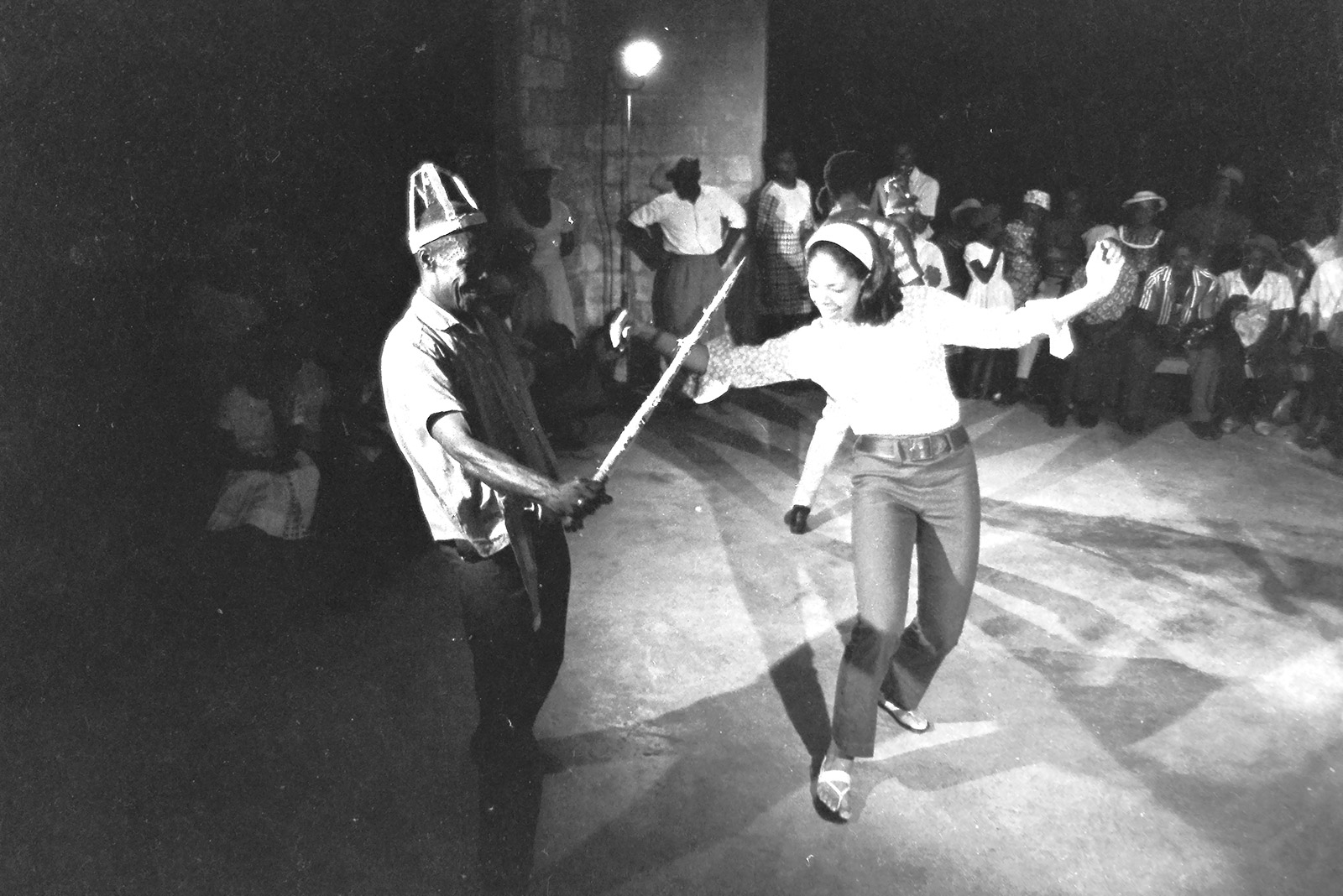
The roots of the National Dance Theatre Company are founded in indigenous rituals and dances extant in rural Jamaica. Company members here participate in a 1967 Bruckins Party Fieldtrip (Manchioneal)
Cultural Significance: The NDTC As A Role Model
Six decades in the life of a dance company may be considered a long time. But for a cultural movement that seeks to discover its own aesthetic, logic and consistency as part of society’s wider process of self-definition, it is a short time indeed. Seedling years are significant, however, and the early period of the National Dance Theatre Company of Jamaica – which operates as part of the movement of self-definition, even giving it shape and articulation – could be of interest not only to dancers and other performing artists all over the world but especially to performers in developing countries who share common concerns about their people’s material well-being and creative potential.
The development and survival of the NDTC is the story of a voluntary action group operating continuously in a developing country over a period of six decades. The Company’s very existence is based on collaborative management as well as the dynamic interaction of all its participants, with creative skills and leadership being mutually reinforcing. This group has succeeded in making a strong impact on the cultural life of Jamaica.
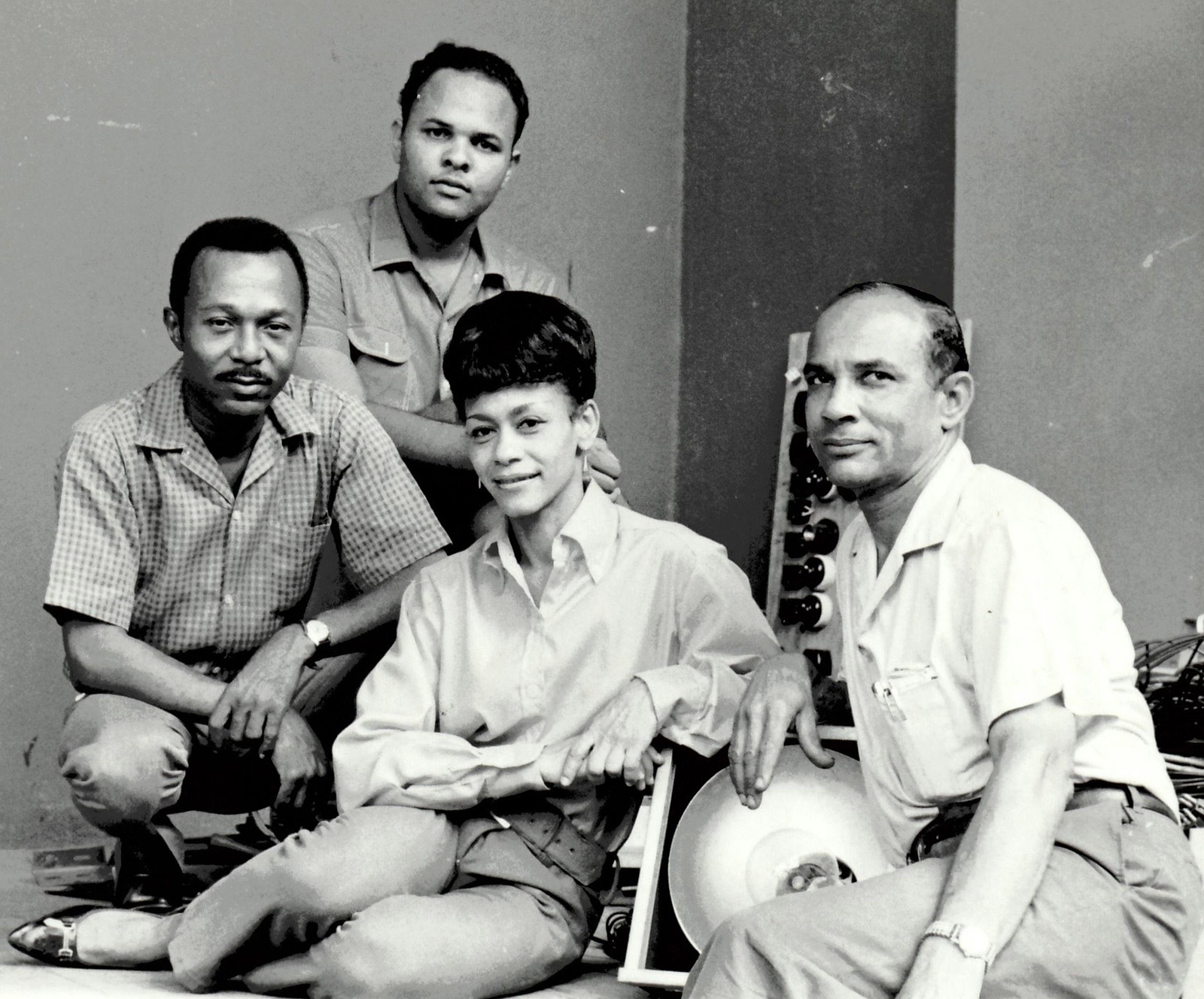
Balwin Lennon (Sound Director), Frederick Hickling (Stage Manager), Barbara Kaufman (Wardrobe Mistress), George Carter (Lighting Director)
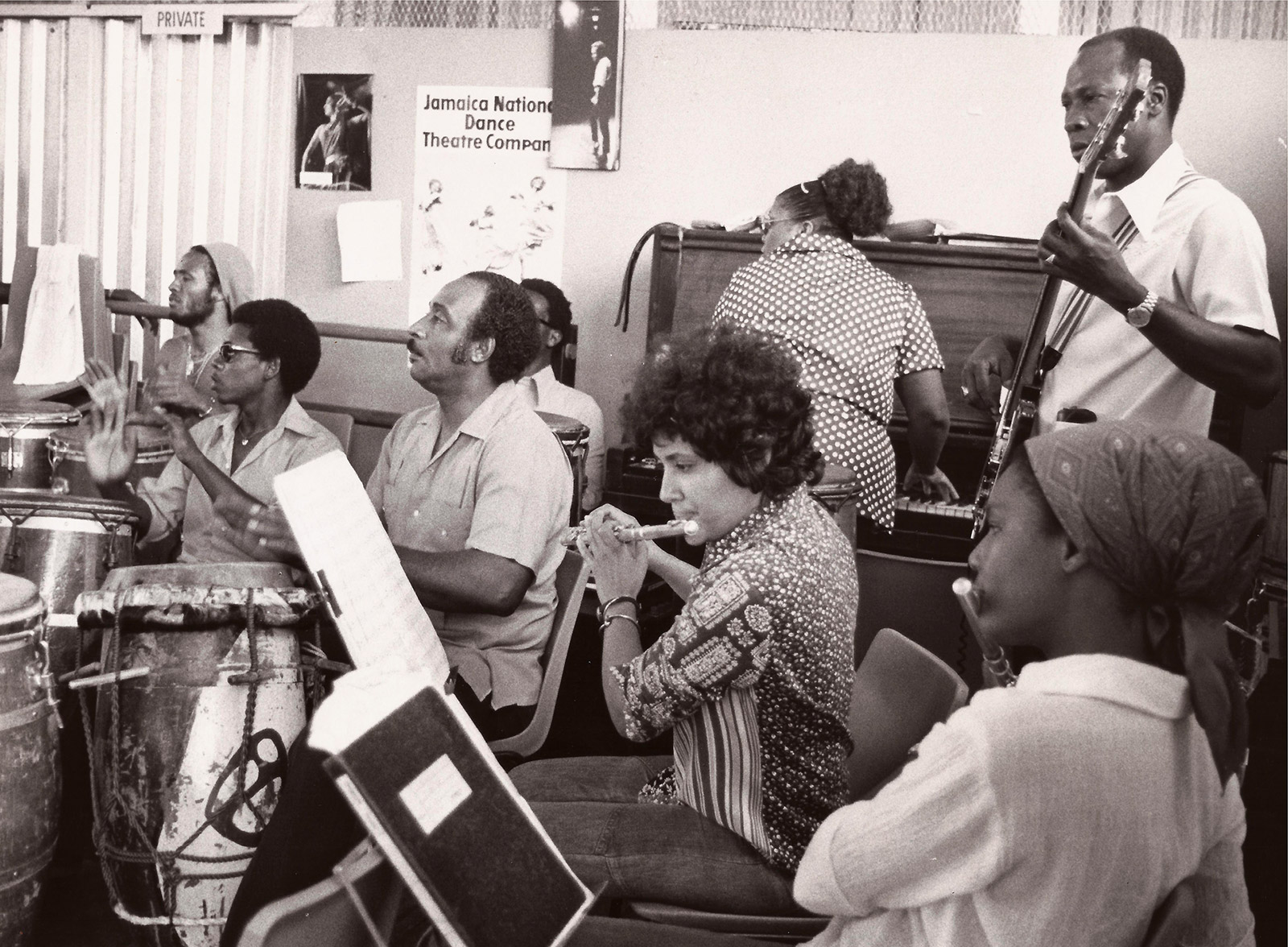
The NDTC Orchestra led by Marjorie Whylie on piano. The other musicians are (left to right) Irvine Jarrett, Antonio Henry, Ronan Critchlow, Steve Golding on congo drums; Barbara Bowland and Minky Jefferson on flute; Lloyd Mason (standing) on guitar
Its unpaid members, who have occupations as students, teachers, doctors, lawyers, civil servants, farmers, and bankers, among others, are dedicated to the view that their efforts in the area of dance will contribute discipline as well as a sense of process and cultural awareness to the task of nation building.
The Jamaican National Dance Theatre Company at sixty still has a ways to go, its members like to say even while lapping up the plaudits of audiences and critics at home and abroad. Probably the words of a reviewer in the prestigious UK Dancing Times of November 2001 sums it up best:
“It is, on the one hand, a great wonder that so small an island has produced so remarkable a company. It is on the other hand, no wonder at all. For the cultures of Africa and of Europe have come together in a unique way on this island. African dancers chose to celebrate pelvic movements because the centre of the body — from which further life springs — is sacred. European dancers in contrast, chose under the influence of Christianity to censure pelvic movement and to celebrate instead bodily composure and possibilities of flowing peripheral movements, and extended footwork. Jamaican dancers who have worked to absorb both traditions, can ripple like snakes and promenade like flamingos. Their dances can vibrate with power and float with decorum… Dance companies capable of delivering such life-informing and life-embracing messages are rare”.
It was St Lucian Nobel laureate Derek Walcott who once described a work by the NDTC as “older than revolution”; and it is Kamau Brathwaite, the Bajan icon of a poet-historian, who reminded his Caribbean compatriots and the world some time ago that…
“the Jamaican National Dance Theatre Company was born as Jamaica was re-born and has lived the stark sonorous destruction and renewal of the dream that the Caribbean has been involved in since 1962, since 1865, since 1834, since 1492 [and] as such it is the avatar and living monument to those countless, voiceless millions dead who made their mark unmarked before this could be so …”
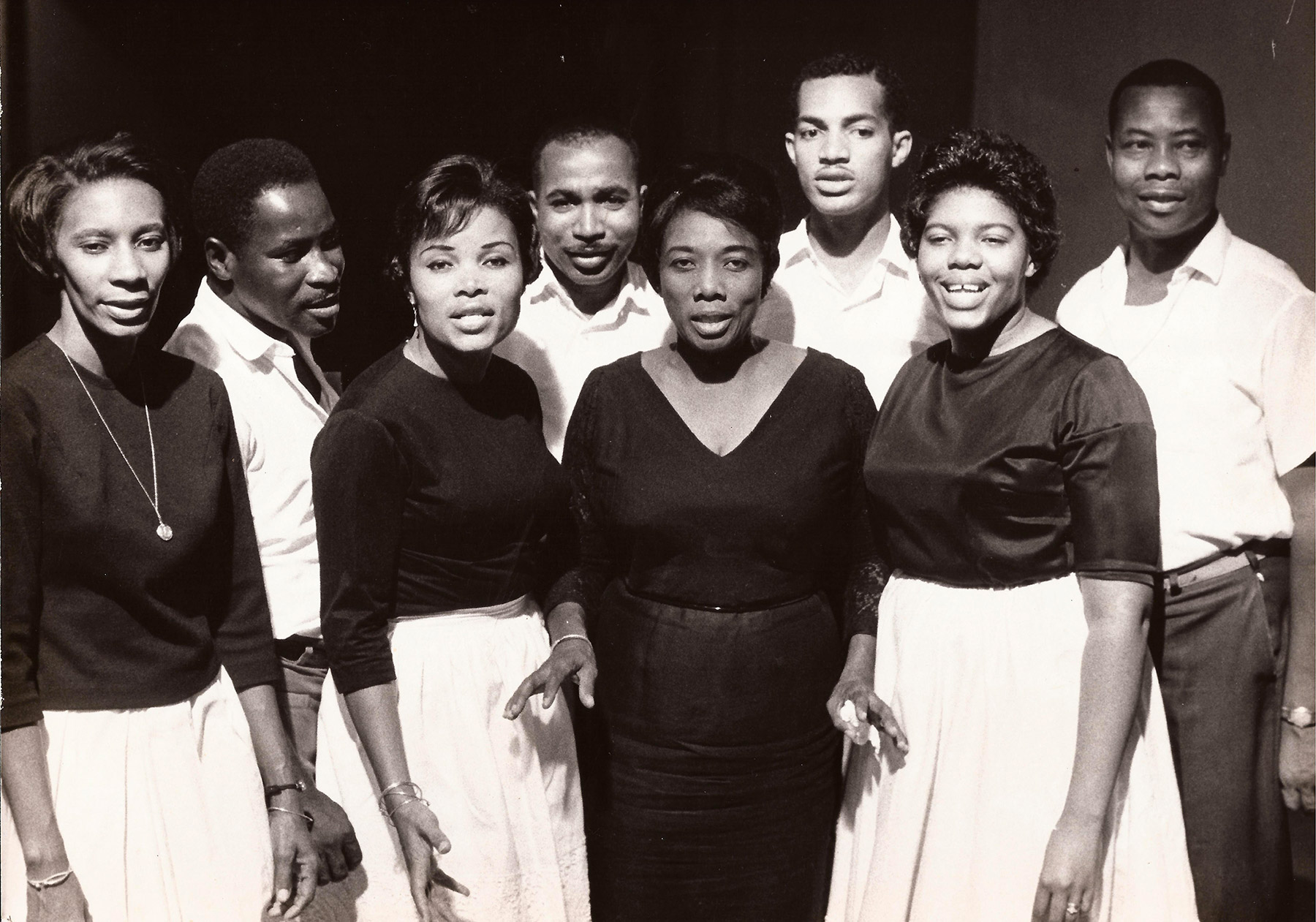
NDTC Singers - 1960s Hazel Sinclair, Stan Irons, Hope Foreman, Joyce Lalor (Vocal Soloist/Leader) Noel Heron, Paula Asontuwa, Vin James
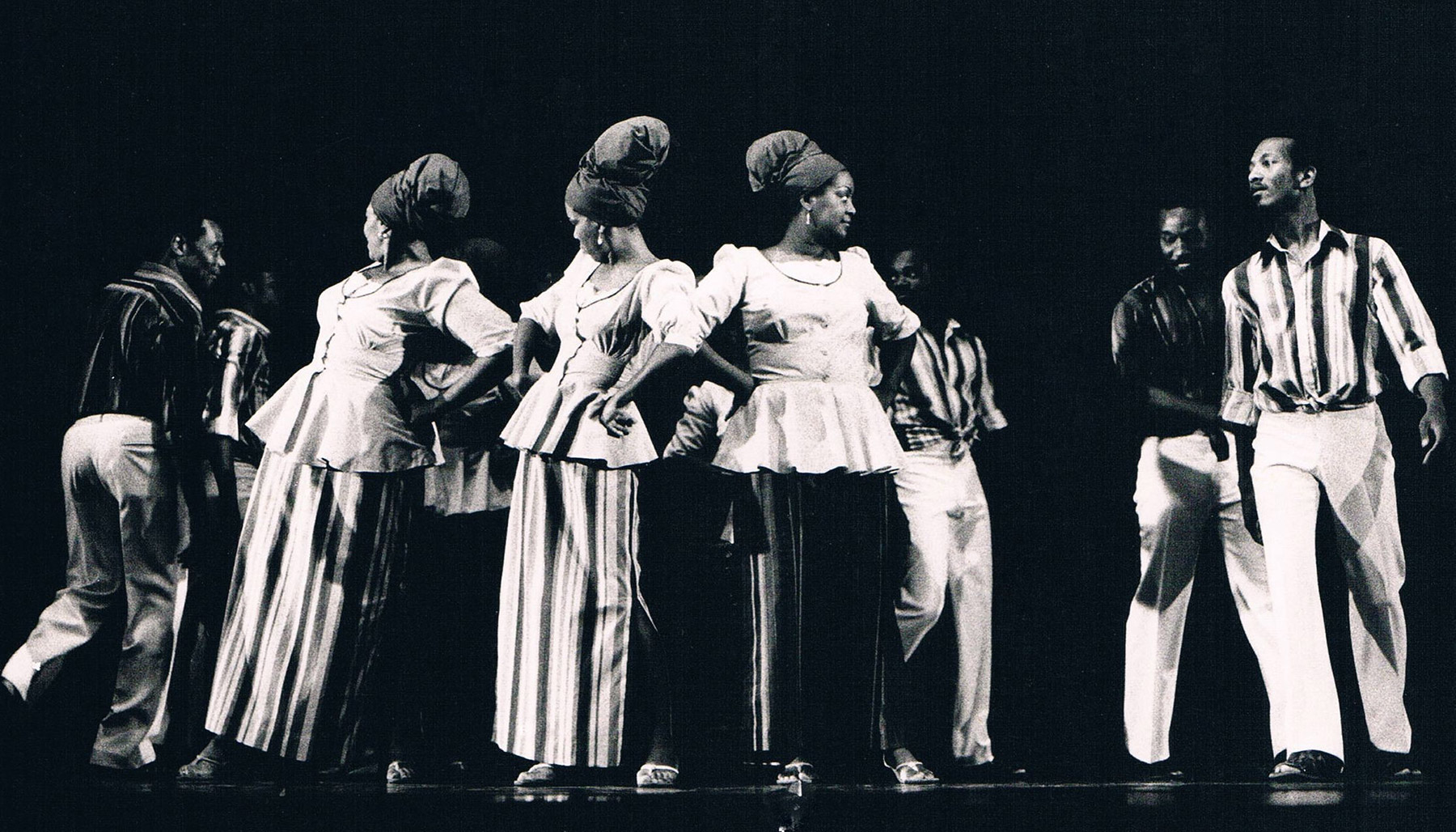
The NDTC Singers serve as a choral orchestra for many Company work
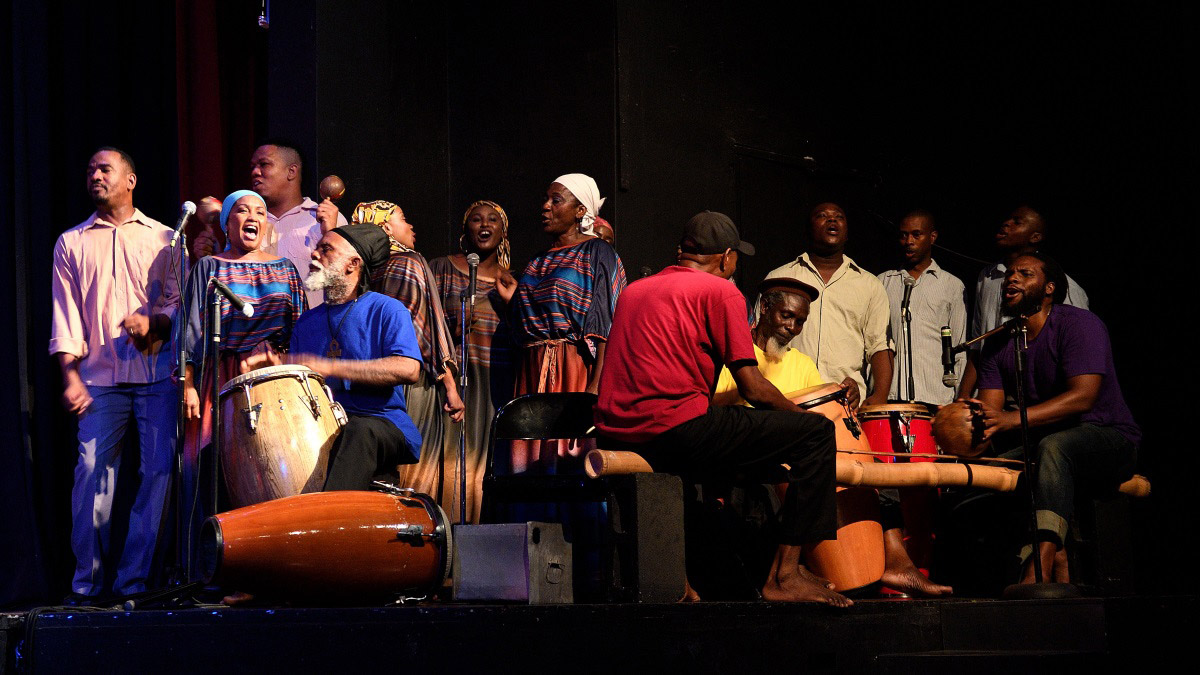
Traditional music forms the basis of many scores arranged for the National Dance Theatre Company. The NDTC Singers and Musicians in Rex Nettleford signature work Gerrehbenta (1983)
The rational management and operation of the NDTC must therefore be credited for the six decades of achievements as follows:
(a) Mounting in Jamaica and the annual Seasons of Dance which have thrown up over 150 dance-works by local, regional and international choreographers;
(b) Serving as Cultural Ambassadors for over 120 overseas tours – to the United States and Canada, the United Kingdom, Finland and Germany, Australia and Russia (the old USSR), Venezuela, Panama and Costa Rica, Puerto Rico, Cuba, Martinique, Guyana, Grenada, Barbados, Trinidad & Tobago, St. Kitts, Antigua, St. Thomas, St. Croix (US Virgin Islands), Bahamas, Bermuda, the Cayman Islands, Belize;
(c) Founding and sustaining the national School of Dance – now a division of the Edna Manley College of the Visual and Performing Arts;
(d) Fostering ‘community dance movement’ through partnership with the Festival Commission, now the Jamaica Cultural Development Commission (JCDC) by the provision of adjudication services in the annual competitions involving youth groups and schools as well as devising syllabuses along with the national Dance Specialist;
(e) Conduct and fostering of research into rituals, music, Jamaican folklore and indigenous movement-forms. Works by Sheila Barnett, Cheryl Ryman (former NDTC Principals), Marjorie Whylie (Musical Director Emerita) as well as Rex Nettleford (past Artistic Director) who served as source of energy for continuing research work done by tertiary level students pursuing undergraduate and graduate work in Dance, Cultural Studies and Performing Arts at such universities as the UWI, State University of New York at Brockport, Temple University as well as universities in Germany, Japan and the Netherlands. A number of such students have studied on NDTC Bursaries;
(f) Serving as model for national dance theatre companies in Barbados, Guyana, Dominica and more recently Belize. Consultancy services sought of the NDTC. The NDTC has served also as model for smaller Jamaican ensembles some of them now directed by NDTC alumni;
(g) Forging a vocabulary, set of techniques and style which are recognized as distinctly Jamaican/Caribbean.
The National Dance Theatre Company (NDTC) of Jamaica remains steadfast at this milestone and is pledged to continue exploring, experimenting, creating, disseminating and educating.
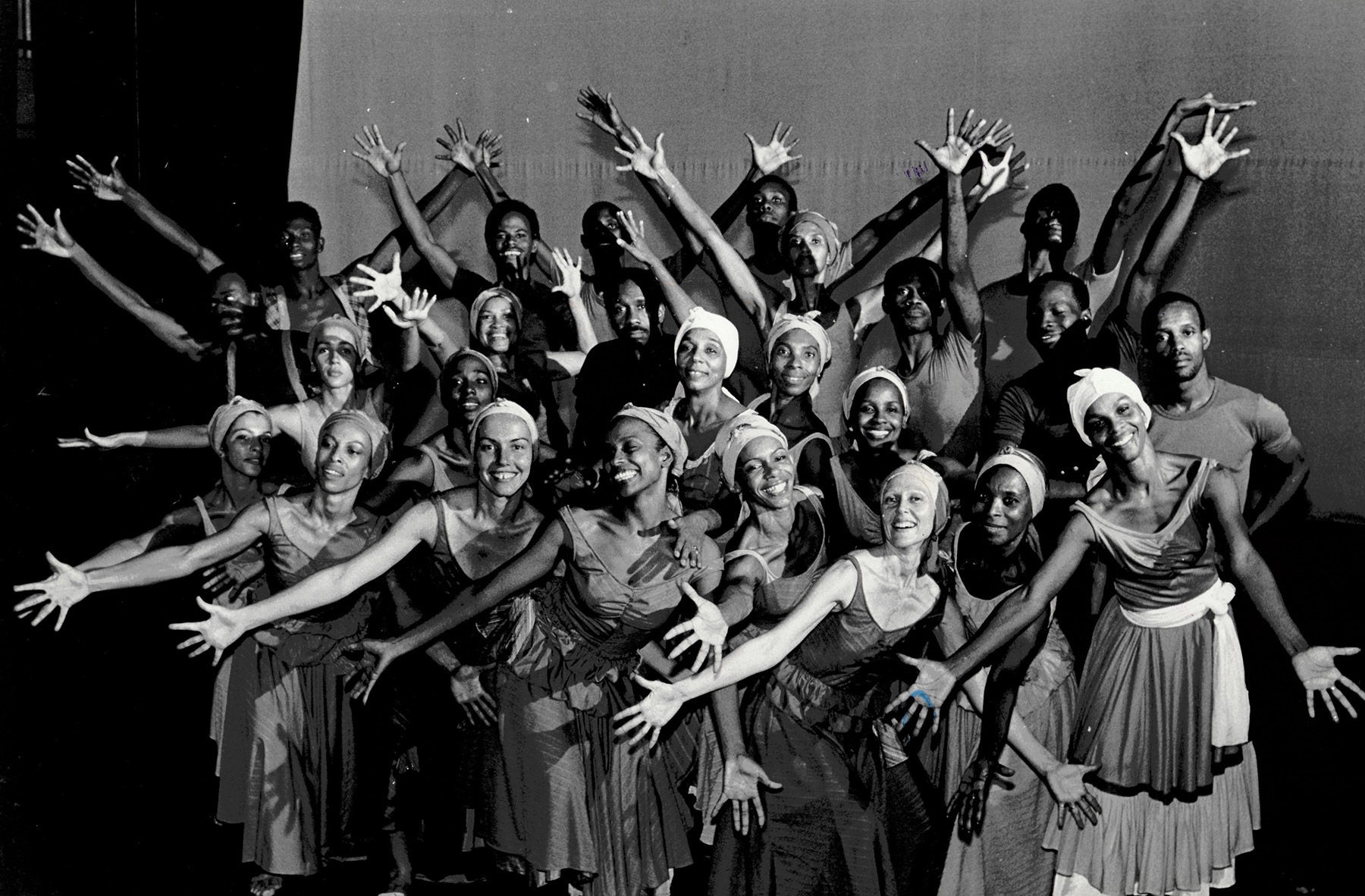
Members of Bridge Generation - Dancers
ABOUT
